
Part 2: Sleep Solutions That Actually Help
- Genelle Holub

- Jun 21
- 5 min read
If you've ever stared at the ceiling at 3 AM wondering why you're awake again, you're not alone. In Part 1, we discussed the common reasons sleep becomes more challenging during menopause. Now let's focus on practical strategies that can help you fall asleep more easily, stay asleep longer, and support healthier skin in the process. To listen to my blog click here.
Create a Nighttime Ritual
One of the most effective ways to prepare your body for sleep is through repetition.
A simple 5- to 10-minute evening routine helps signal to your brain that the day is ending and it's time to unwind. Reading a book, flipping through a magazine, writing in a journal, listening to calming music, or practicing deep breathing can all help activate the body's relaxation response. Your bedroom environment matters too.
Use blackout curtains to block light.
Keep your room cool.
Close windows if outside noises disturb your sleep.
Consider white noise, rainfall sounds, or calming sleep music.
Put away phones and tablets at least 30 minutes before bed.
The goal is to create a peaceful transition from activity to rest.
Turn Your Skincare Into Self-Care
Your nighttime skincare routine can become one of the most relaxing parts of your day.
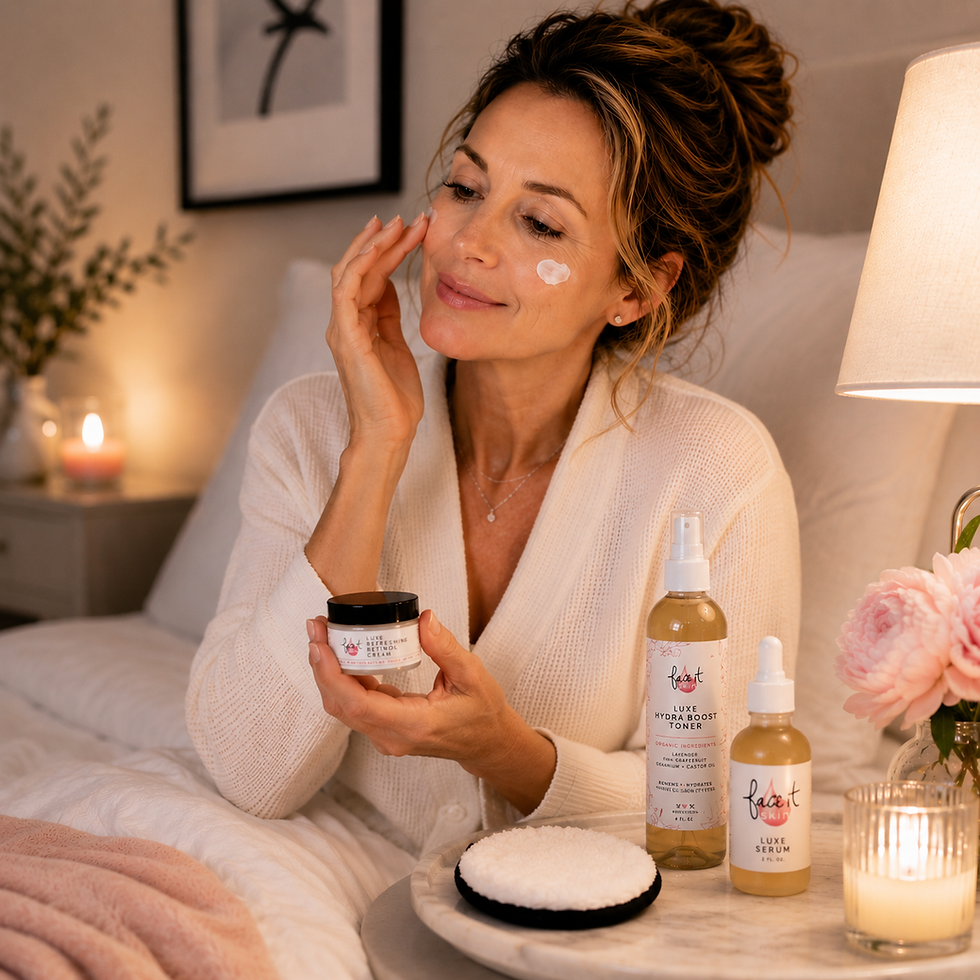
At Face It Skin, our neurocosmetic approach recognizes that the skin and nervous system are closely connected. The textures, aromas, and sensory experience of skincare can help encourage relaxation while delivering ingredients that support healthier skin.
As I mentioned in my previous blog my favorite evening ritual begins with Luxe Potion, followed by Luxe Refreshing Retinol Cream, 5 sprays of Luxe Hydra Boost Toner gently massaged into the skin, and then Luxe Serum (if needed).
Retinol encourages healthy cell turnover while peptides and nourishing ingredients support the appearance of firmer, healthier-looking skin. The ritual itself creates a moment to slow down, breathe deeply, and tell your brain that it's time to rest.
Because great skincare should do more than improve how your skin looks—it should help improve how you feel.
Other rituals to help you wind down are: reading a good book, taking a warm bath with Epsom salts with your favorite scent, spraying your sheets with scented linen spray with a natural scent that calms you, rubbing Luxe Serum on your temples and under your nose or all over your face for a calming effect. Find what calms you and make it your evening ritual.
Don't Forget Your Eyes

Sleep deprivation often shows up first around the eyes.
Dark circles, puffiness, dehydration, and fine lines can all become more noticeable when sleep is disrupted.
Luxe Eye Gelly Treat was created to help hydrate, soothe, and refresh the delicate eye area. Applying it during your nighttime ritual can help reduce the appearance of puffiness while supporting a brighter, more rested look by morning.
Consider Magnesium Glycinate
Magnesium plays an important role in nervous system regulation, muscle relaxation, and sleep quality. Many healthcare providers recommend magnesium glycinate because it is generally well tolerated and the glycine component may have calming effects of its own.
Taking magnesium glycinate approximately 1 to 2 hours before bedtime may help support relaxation and prepare the body for sleep. I do this every evening with a cup of sleep tea while using my skincare as my self-care in bed. Remember to always discuss supplements with your healthcare provider, especially if you take medications or have underlying health conditions.
My Biggest Sleep Improvement: Switching to Decaf
This may not be the answer everyone wants to hear, but reducing caffeine can make a meaningful difference. My husband and I switched to decaf coffee about six years ago. Looking back, I didn't realize how much caffeine was affecting my nervous system until I stopped drinking it. Over time, I noticed I felt calmer, less reactive, and more relaxed throughout the day. Even if you fall asleep easily, caffeine can contribute to lighter sleep, nighttime awakenings, increased cortisol production, and a nervous system that remains more activated than it needs to be.

If you're struggling with anxiety, racing thoughts, or waking up at 3 AM, consider experimenting with decaf for a few weeks and see how your body responds. Don't cut cold turkey but start with half caff/decaf and slowly reduce the caffeinated part until you completely cut it out. It took us 7-10 days and we didn't have headaches or withdrawals. We're also not missing out on flavor because we did it slowly. We still have the morning aromas, flavor of coffee and our coffee ritual so it was super easy. One unexpected benefit of switching to decaf was how much calmer my nervous system felt. While caffeine doesn't affect everyone the same way, I noticed fewer jitters, less reactivity, and a greater sense of calm throughout the day. Some research also suggests that certain unfiltered (reusable baskets) coffee preparations may contribute to higher cholesterol levels, making filtered (coffee filters) or decaf options worth considering if you're working on both sleep and heart health.
Talk to Your Doctor About Sleep Support
For some women, lifestyle changes alone aren't enough. If chronic insomnia is affecting your quality of life, talk with your healthcare provider. Some women find benefit from prescription options such as trazodone, which is often prescribed at low doses to support sleep maintenance and reduce nighttime awakenings. Others may benefit from discussing hormone replacement therapy with their provider. Your healthcare provider can help determine which approach is best for your individual needs.
Eat Foods That Support Hormonal Balance
While no food can replace estrogen, certain foods contain compounds called phytoestrogens that may help support the body during menopause.
Foods rich in phytoestrogens include:
Organic soy foods such as edamame, tofu, and tempeh
Flaxseeds
Sesame seeds
Chickpeas
Lentils
Beans
Oats
Apples
Berries
As a Nutrition-Certified Esthetician, I often remind clients that healthy skin begins from within. What nourishes your body also helps support your skin. Tip: I use ground/powdered flaxseed in my coffee with my chocolate protein. It gives me what I need for my skin while giving my coffee a mocha nutty flavor.
Protect Your Collagen
Poor sleep and elevated cortisol don't just affect energy levels. They can also contribute to collagen breakdown over time.
This may show up as:
Increased fine lines
Loss of firmness
Thinner-looking skin
Dullness
More noticeable under-eye concerns

One of the best ways to help rebuild collagen is through Collagen Induction Therapy (CIT), including nanoneedling and microneedling. These treatments stimulate the skin's natural repair process, encouraging fresh collagen and elastin production. Over time, many women notice firmer skin, improved texture, smoother fine lines, and a healthier overall glow. Think of it this way: while quality sleep helps reduce collagen breakdown, CIT treatments help encourage the skin to rebuild what stress, aging, and hormonal changes have slowly taken away.
The Bottom Line
There is rarely one solution for sleep challenges during menopause. The most successful approach combines several small habits that work together to support the nervous system.
Better sleep starts with calming the body, supporting hormonal health, reducing stress, nourishing the skin, and creating rituals that help you transition from a busy day into restorative rest.
When you sleep better, your energy improves. Your mood improves. Your nervous system calms. And your skin often reflects those changes right along with you.
Because healthy aging isn't about looking younger—it's about helping your body and skin function at their very best.
Beauty Pulse Takeaway: Better sleep is one of the most powerful beauty treatments available—and it's completely free.

Genelle Holub
Founder
Face It Skin


Comments